
Window Service
Double Pane Windows Jacksonville FL
A double pane window is an insulated glass unit: two lites of glass sealed around a spacer with a captive air or argon space between them. That sealed cavity is what separates a modern replacement window from the single-pane aluminum units still found in many older Jacksonville homes.
Here is how the assembly works, why seals eventually fail, what fogging really means, and how to decide whether upgrading from single pane is worth the investment in this climate.
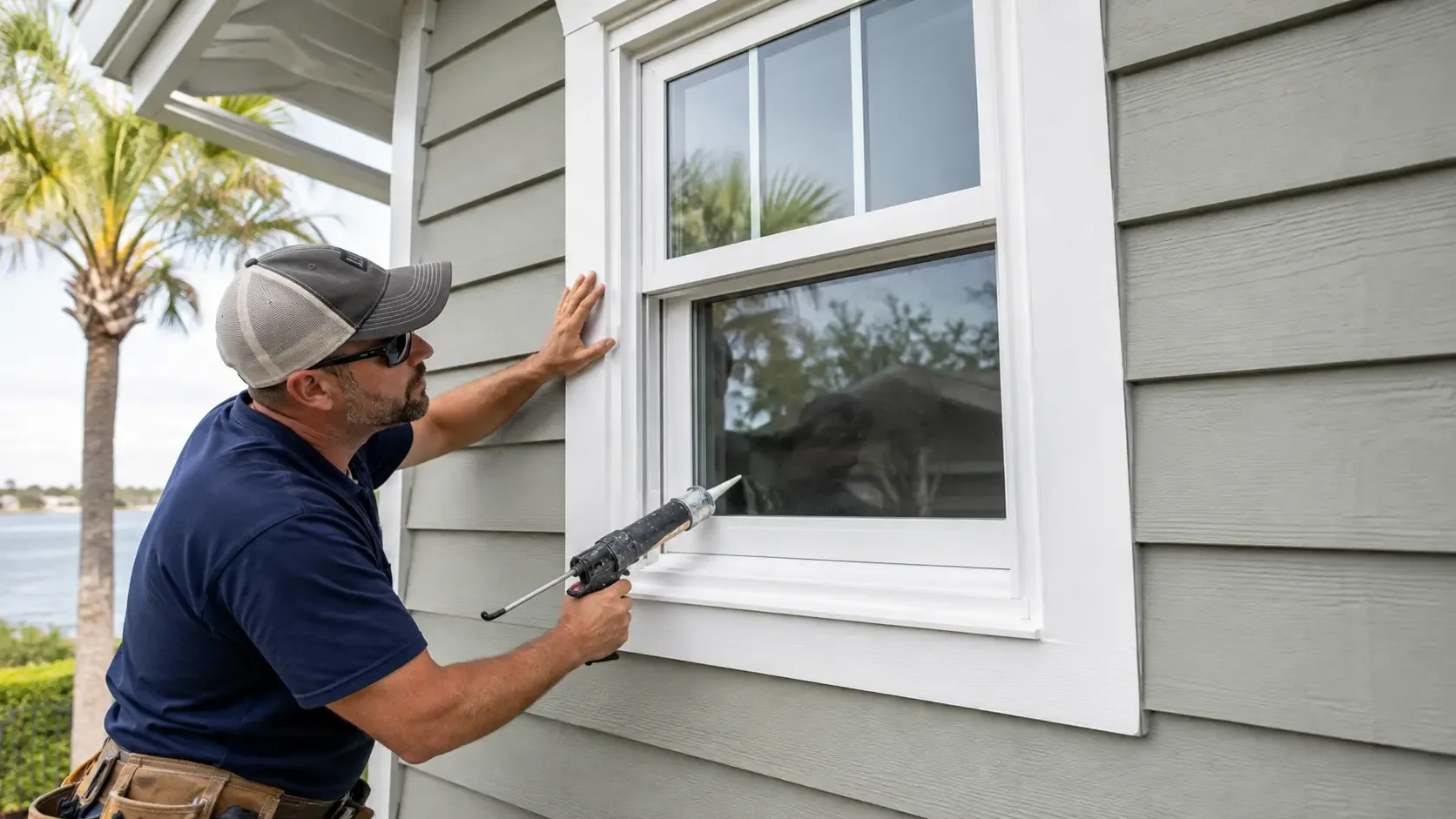
How an insulated glass unit is assembled
Two lites of glass are separated by a spacer bar around the perimeter and bonded with a primary and secondary sealant. Desiccant inside the spacer absorbs residual moisture so the cavity stays dry. The result is a sealed, self-contained unit that is then glazed into the window frame.
The cavity slows conductive and convective heat transfer. Filling it with argon improves that slightly because argon is denser and less conductive than air. The width of the gap matters too: too narrow and conduction increases, too wide and convection currents form inside the cavity.
- Spacer type affects edge conduction and condensation resistance
- Desiccant keeps the sealed cavity dry over the life of the unit
- Argon fill lowers U-factor modestly at low incremental cost
- The glass coating, not the cavity, drives solar heat control in Florida
Single pane vs double pane in a Jacksonville home
Single-pane glass in an aluminum frame conducts heat readily, offers minimal sound attenuation and often pairs with worn weatherstripping. Homes built in Jacksonville before the 1990s frequently still have them, and the difference after replacement is usually obvious inside the first summer.
The comfort change comes from three things at once: a sealed insulated cavity, a modern Low-E coating limiting solar gain, and a much tighter frame-to-sash seal. Isolating the double-pane cavity alone understates the improvement, because in practice all three change together.
If your budget forces a choice, the Low-E coating usually delivers more summer comfort in Jacksonville than upgrading the cavity gas. Both together are the standard modern specification.
Why windows fog between the panes
Fogging inside the glass — moisture you cannot wipe away — means the perimeter seal has failed and the desiccant is saturated. Humid outside air has migrated into the cavity and condenses when temperatures swing. In Jacksonville's humidity, a compromised seal shows itself quickly.
Seal failure is a material and workmanship issue accelerated by heat cycling, standing water at the sill and mechanical stress. Once it happens, the insulating value is degraded and mineral deposits gradually etch the interior glass surfaces.
- Fogging you cannot clean = failed seal, not dirty glass
- Some manufacturers cover glass-seal failure under a specific warranty term
- The insulated glass unit can sometimes be replaced without replacing the whole window
- Widespread fogging across many windows usually signals the units are near end of service life
Condensation on the room side
Condensation on the interior surface of the glass is different from fogging between panes. It forms when humid indoor air meets a glass surface below the dew point, and it is more about indoor humidity and surface temperature than about a defective window.
Warm-edge spacers and better U-factors raise interior glass temperature and reduce how often this happens, but controlling indoor humidity — bath fans, kitchen ventilation and a properly sized air conditioning system — matters just as much.
Noise reduction expectations
A sealed double pane unit generally reduces noise compared with worn single-pane glass, largely because air infiltration is eliminated. For meaningful reduction of traffic or aircraft noise, laminated glass with an acoustic interlayer or unequal glass thicknesses in the unit does considerably more than a standard equal-lite double pane.
If noise is a primary motivation — living near Beach Boulevard, I-95, or a flight corridor — say so early so the glass package can be specified accordingly rather than assumed.
Replacement considerations and cost
Double pane insulated glass is the standard baseline in modern replacement windows, so the incremental cost over a bare-minimum unit is small relative to the total project. The larger cost decisions are frame material, impact rating, size and installation complexity.
If only a handful of units have failed seals, replacing just the insulated glass can be viable when the frames and hardware are sound. When frames are deteriorated or the units are old enough that more failures are likely, full replacement usually makes better economic sense.
Questions
Frequently asked questions
Answers are shown in full — no hidden panels to click through.
Why are my windows fogging between the panes?
The perimeter seal on the insulated glass unit has failed, allowing humid air into the sealed cavity where it condenses. It cannot be cleaned because the moisture is inside the sealed assembly. Depending on the frame condition and warranty, either the glass unit or the entire window can be replaced.
Is double pane glass worth it in Florida?
Yes, in the sense that it is the modern baseline: a sealed insulated unit with a Low-E coating manages heat and comfort far better than the single-pane glass common in older Jacksonville homes. The bigger contributor to summer comfort here is the solar control coating, and the two are almost always specified together.
What is the difference between double pane and impact windows?
Double pane describes the insulated glass assembly; impact describes laminated glazing and reinforced framing designed to keep the pane in the opening after breakage. Many impact windows are also double pane, so the two terms describe different attributes of the same unit rather than competing products.
Can I replace just the glass instead of the whole window?
Sometimes. If the frame, sash and hardware are in good condition and the manufacturer's glass unit is available, replacing the insulated glass alone can be an economical repair. Where frames are deteriorated or several units have already failed, full replacement is usually the better long-term value.
Do triple pane windows make sense in Jacksonville?
Triple glazing is aimed primarily at heating-dominated climates. In Northeast Florida, the extra weight and cost rarely pay off compared with investing the same money in a better solar control coating, laminated acoustic glass, or impact-rated units.
How long do insulated glass seals last?
Service life varies widely with product quality, exposure and installation. Many units perform well for a decade or more, and warranties for glass seal failure are common. Standing water at the sill, poor drainage and heavy heat cycling shorten the life of any sealed unit.
Free Estimate
Replace fogged or single-pane windows
Share a few details about your home and windows, and we will help you compare realistic options and planning ranges.
4720 Salisbury Rd, Suite 734 · Jacksonville, FL 32256