
Window Service
Window Installation Jacksonville FL
Product selection gets the attention, but installation decides whether a window performs the way its label promises. A well-specified unit set in an out-of-square opening with poor flashing will leak, stick and underperform.
This page walks through the window styles most often installed in Jacksonville homes and the field process behind a correctly installed unit — measuring, opening preparation, setting, anchoring, sealing and finishing.
Window styles installed in Jacksonville homes
Most homes end up with a mix. A common configuration pairs fixed picture units in living areas with operable double hung or casement windows on either side for ventilation and egress.
- Double hung — both sashes operate and tilt in for cleaning; the most versatile choice for two-story homes
- Single hung — lower sash operates only; the most common and economical option in local subdivisions
- Casement — crank-operated, seals tightly against the frame and catches side breezes well
- Awning — hinged at the top, can stay open during light rain, often used above fixed glass
- Picture / fixed — no operating hardware, maximum glass area and the best value per square foot
- Horizontal sliding — practical for wide openings and common in mid-century Arlington and Southside homes
- Architectural shapes — arched, radius, trapezoid and transom units, usually custom-ordered
Full-frame replacement vs insert (pocket) installation
An insert or pocket replacement sets a new unit inside the existing frame, keeping exterior trim and finishes intact. It is faster, less disruptive and less expensive, and it works when the existing frame is structurally sound and dry.
A full-frame replacement removes the entire unit down to the rough opening, allowing inspection and repair of the framing, new flashing and a proper water management detail. It costs more and touches more finishes, but it is the right call when there is rot, corrosion, prior leaking or when you want to change the size or style of the opening.
Insert installations slightly reduce visible glass area because the new frame sits inside the old one. On smaller windows that difference is worth discussing before ordering.
Measuring: why it happens twice
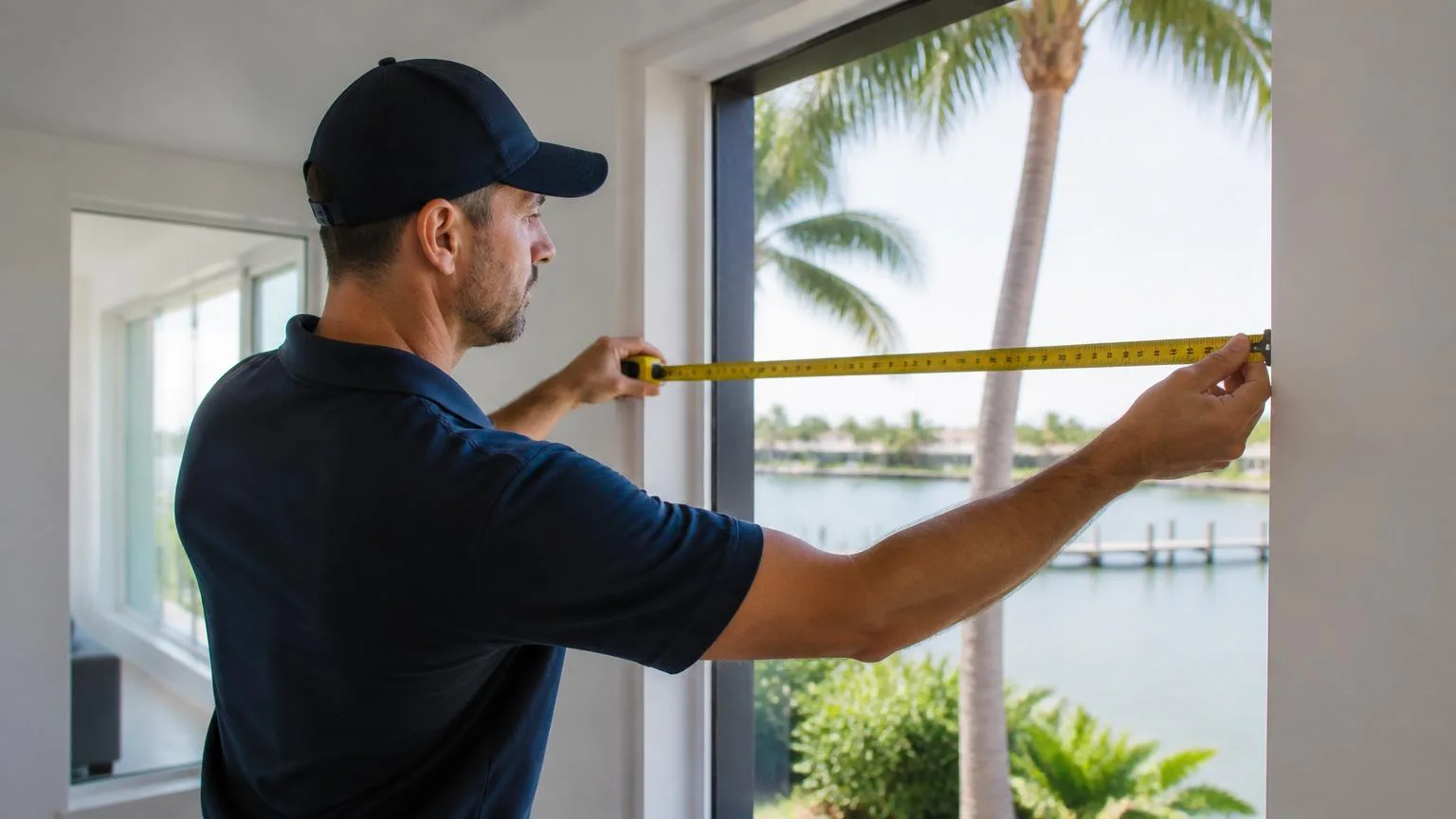
An initial measurement supports the estimate. A second, precise field measurement is taken before the order is placed, because manufacturing tolerances are tight and openings in older homes are rarely perfectly square.
Measurements are taken at multiple points — width at top, middle and bottom; height at left, center and right — and the smallest dimension controls. Diagonals are checked for square, sill slope is checked for drainage, and existing conditions such as stucco returns, brick mold or wood trim are documented.
Opening preparation and what gets discovered
Once the old unit is out, the opening tells the truth. Common findings in Jacksonville homes include soft or rotted wood at the sill, corroded fasteners in coastal areas, missing or reversed flashing, failed stucco patches and previous repairs done with sealant instead of proper detailing.
Repairs are made before the new unit goes in: replacing damaged framing, correcting sill slope, installing flashing and a sill pan where appropriate, and creating a clean, dry substrate for the new window to seal against.
- Interior surfaces protected and work area contained before removal
- Existing sash, frame and fasteners removed carefully to limit finish damage
- Opening inspected, dried and repaired as needed
- Sill pan or flashing installed to direct incidental water back out
Setting, anchoring and sealing
The new unit is dry-fit, shimmed level, plumb and square, then checked for smooth operation before final fastening. Shims go at load points so the frame is not distorted by fastening — a warped frame is the usual reason a brand-new window binds or fails to lock cleanly.
Anchoring follows the manufacturer's fastener type, size and spacing. The perimeter is then sealed with the appropriate sealant and, where applicable, low-expansion foam is used in the shim space so it insulates without bowing the frame.
Finishing, cleanup and walkthrough
Exterior finishing restores stucco, siding or trim and completes the water management detail. Interior finishing addresses casing, drywall returns and caulking so the new unit looks intentional rather than patched in.
A final walkthrough should include operating every sash and lock, checking screens, confirming the exterior seal is continuous, removing labels and debris, and reviewing warranty documentation and care instructions.
Questions
Frequently asked questions
Answers are shown in full — no hidden panels to click through.
How long does window installation take?
A straightforward insert replacement often takes roughly one to two hours per opening once the crew is set up, so many homes are completed in one to two days. Full-frame replacements, stucco repairs, second-story access and oversized units extend that timeline. Lead time for manufacturing is usually the longer part of the schedule.
How are replacement windows measured?
Width is measured at the top, middle and bottom and height at the left, center and right, with the smallest dimension controlling the order. Diagonals are checked for square and sill slope is checked for drainage. A precise second measurement is taken before ordering because openings in existing homes are rarely perfectly square.
Do I need to remove blinds and furniture?
Clearing window treatments, blinds, curtain rods and anything on the sill helps considerably, and moving furniture a few feet away from each opening gives the crew safe working space. Anything fragile nearby is best relocated before the crew arrives.
Will my walls be damaged during installation?
Insert installations usually leave interior finishes largely intact. Full-frame replacements involve more disturbance to interior casing and exterior stucco or siding, which is why finishing is part of the scope. Ask up front what finish restoration is included in your estimate.
What happens to my old windows?
Old units are removed from the property and disposed of or recycled where local facilities accept the material. Removal and disposal is normally included in the installation scope, but it is worth confirming that in writing, especially on large whole-home projects.
Can you replace windows in an unusual shape or size?
Yes. Arched, radius, trapezoid and oversized units are typically custom-manufactured to field dimensions. They require longer lead times and careful templating, and cost more per opening than standard stock sizes.
Free Estimate
Plan your window installation
Share a few details about your home and windows, and we will help you compare realistic options and planning ranges.
4720 Salisbury Rd, Suite 734 · Jacksonville, FL 32256